
Breaking the Bottleneck: TorchSpec and the Future of Disaggregated Speculative Decoding
In the world of Large Language Models (LLMs), speed is the ultimate currency. As models like Kimi K2.5 and Qwen 3.5 push into the hundreds of billions of parameters with million-token context windows, the industry has turned to Speculative Decoding to keep latency in check. However, training the “draft models” required for speculative decoding has…

Migrating from Kubernetes Ingress to Gateway API: A Zero-Downtime Production Success Story
Kubernetes networking has reached a critical inflection point. For years, the Ingress API together with controllers like NGINX Ingress powered most production workloads. That chapter is now closing. As of March 2026, the widely used NGINX Ingress Controller has reached End-of-Life, with no further security updates. Organizations still running it face growing security and compliance…
Anthropic’s 33-Page Guide to Building Claude Skills: Everything You Need to Know
Anthropic has released The Complete Guide to Building Skills for Claude, a detailed 33-page PDF resource that serves as the official playbook for creating custom “Skills” to make Claude more consistent, efficient, and tailored to real workflows. What Are Skills? A Skill is essentially a folder that packages instructions, optional scripts, templates, and references to…
NVIDIA’s Nemotron 3: Pioneering Open, Efficient Models for the Agentic AI Era
NVIDIA has officially launched the Nemotron 3 family of open models, marking a major advancement in transparent, high-performance AI built for the agentic era. First announced in late 2025, this release includes model weights, extensive training datasets, and full reinforcement learning recipes—empowering developers to build specialized multi-agent systems with unprecedented visibility. Unlike closed-source alternatives, Nemotron…
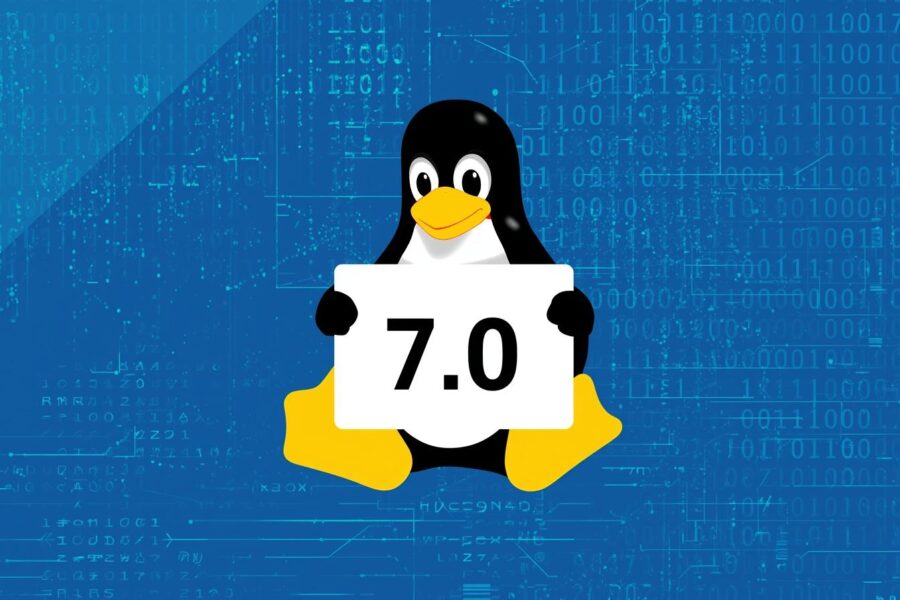
Linux kernel 7.0 supports net namespace in AF_VSOCK.
The Linux kernel version 7.0 now supports network namespaces in AF_VSOCK. This fixes issues in how virtual sockets work in isolated environments like containers. It’s exciting for anyone working with virtualization! What is AF_VSOCK? Let’s start simple. In normal networking, programs use sockets to talk over the internet or local networks. These use address families…
CopilotKit: The Open-Source Framework Revolutionizing In-App AI Copilots
In 2026, AI agents are no longer just chatbots or external tools—they’re becoming deeply integrated parts of applications themselves. Developers increasingly want to build “agentic” experiences where AI can understand app context, control UI elements, execute actions, and collaborate with users in real time. Enter CopilotKit, an open-source framework that’s rapidly gaining traction for making…
Exploring Kine: The Etcd Shim Revolutionizing Kubernetes Storage
In the world of container orchestration, Kubernetes is the de facto standard. However, its core component—the etcd key-value store—can be a heavyweight dependency for edge environments or small clusters. Enter K3s, Rancher’s minimalist distribution, and its secret weapon: Kine. What is Kine? Kine (pronounced “kine” like “bovine”) is an open-source etcd shim. It acts as…

Bring AI Vision to the Edge: Weaviate Releases CLIP Inference Support for NVIDIA Jetson
The frontier of “Edge AI” just moved a significant step forward. In a recent announcement on X (formerly Twitter), vector database pioneer Weaviate revealed that its Multi2Vec CLIP inference container (v1.5.0) now officially supports NVIDIA Jetson devices. This update bridges the gap between powerful multimodal AI models and energy-efficient edge hardware, allowing developers to run…